

Imagine a simple daily habit, adding an extra handful of berries to your oatmeal or choosing wholegrain bread – that could ease mood swings, support steady energy, and promote reproductive wellness. That’s the behind-the-scenes magic of dietary fibre, quietly working to harmonise your hormones.
Fibre and hormones relationship
Regulating Estrogen Through Gut and Liver Pathways
Fibre plays a crucial role in moderating estrogen levels. Studies show that increasing fibre intake can reduce circulating estrogen by roughly 10–25%, likely through decreased beta-glucuronidase activity in the gut, which diminishes estrogen re-absorption. This process allows excess estrogen to be excreted rather than recirculated and this is an important step for hormone equilibrium.
Additionally, soluble fibre slows digestion and helps form a gel-like matrix that stabilises blood sugar and insulin – also key players in hormonal health. This effect is vital because insulin imbalances can ripple into reproductive or thyroid hormones, exacerbating symptoms such as PMS or metabolic dysregulation.
Fibre, Insulin Resistance, and Reproductive Hormones
Study found that higher dietary fibre intake was independently associated with lower insulin resistance, even when accounting for glycemic index, load, and simple sugars, pointing to fibre’s protective metabolic role. Lower insulin resistance supports more balanced hormones, particularly in women with PCOS or metabolic syndrome.

Satiety, Weight Management, and Hormonal Signals
Fibre’s ability to add bulk and slow digestion goes far beyond just “keeping things moving.” When fibre lingers in the stomach and intestines, it triggers the release of hormones that tell your body you’re satisfied. One of these is cholecystokinin (CCK), sometimes called the “satiety hormone,” which signals to your brain that you’ve eaten enough. At the same time, fibre slows the release of sugar into the bloodstream, preventing sharp insulin peaks. The combined effect is powerful: you feel fuller for longer, your energy stays steadier, and your metabolism is supported in a more balanced way.
Glycemic Load, Carbohydrates, and Hormonal Health
Understanding the glycemic index (GI) and glycemic load (GL) helps clarify fibre’s role in hormone balance. GI measures how quickly carbohydrates raise blood glucose and GL accounts for the quantity of carbs in a serving. High-GI/GL diets create blood sugar spikes, stressing insulin and potentially triggering downstream disruptions in reproductive or adrenal hormones.
Yet, fibre helps temper these effects. A low-GI, high-fibre breakfast – think oats with berries and flaxseeds, does more than just avoid a blood sugar spike. The fibre creates bulk and viscosity in the gut, which slows down how quickly carbohydrates are broken down and absorbed.
According to the Linus Pauling Institute, foods that are low on the glycemic index don’t always guarantee a gentle blood sugar response if they are low in fibre. For example, a food may technically be “low GI” but still deliver a fairly quick glucose rise if it lacks enough fibre to slow the process. By contrast, meals rich in soluble fibre form a gel-like substance during digestion. This not only lowers the immediate glucose response but also reduces insulin demand and smooths out the hormonal ripple effect that follows eating.
In other words: fibre amplifies the benefits of a low-GI diet. It doesn’t just control the speed of sugar entering the bloodstream; it changes the overall hormonal impact of the meal, supporting steadier energy, better insulin sensitivity, and fewer sharp rises and crashes in both glucose and mood.
Fermentation and Short-Chain Fatty Acids (SCFAs)

When fibre reaches the large intestine, it doesn’t just pass through unnoticed – it becomes food for your gut bacteria. As these microbes ferment fibre, they produce powerful compounds called short-chain fatty acids (SCFAs), including butyrate, propionate, and acetate. These SCFAs act like messengers in the body, helping to improve blood sugar control, boost insulin sensitivity, and strengthen the immune system. Some research even suggests they can influence how hormone receptors work, fine-tuning the way your cells respond to signals.
This means fibre supports hormone balance in two ways at once: directly, by moderating blood sugar and insulin, and indirectly, by nourishing the gut microbiome – which then sends its own beneficial signals back into the hormonal system.
Practical takeaways: Forward-Thinking Tips
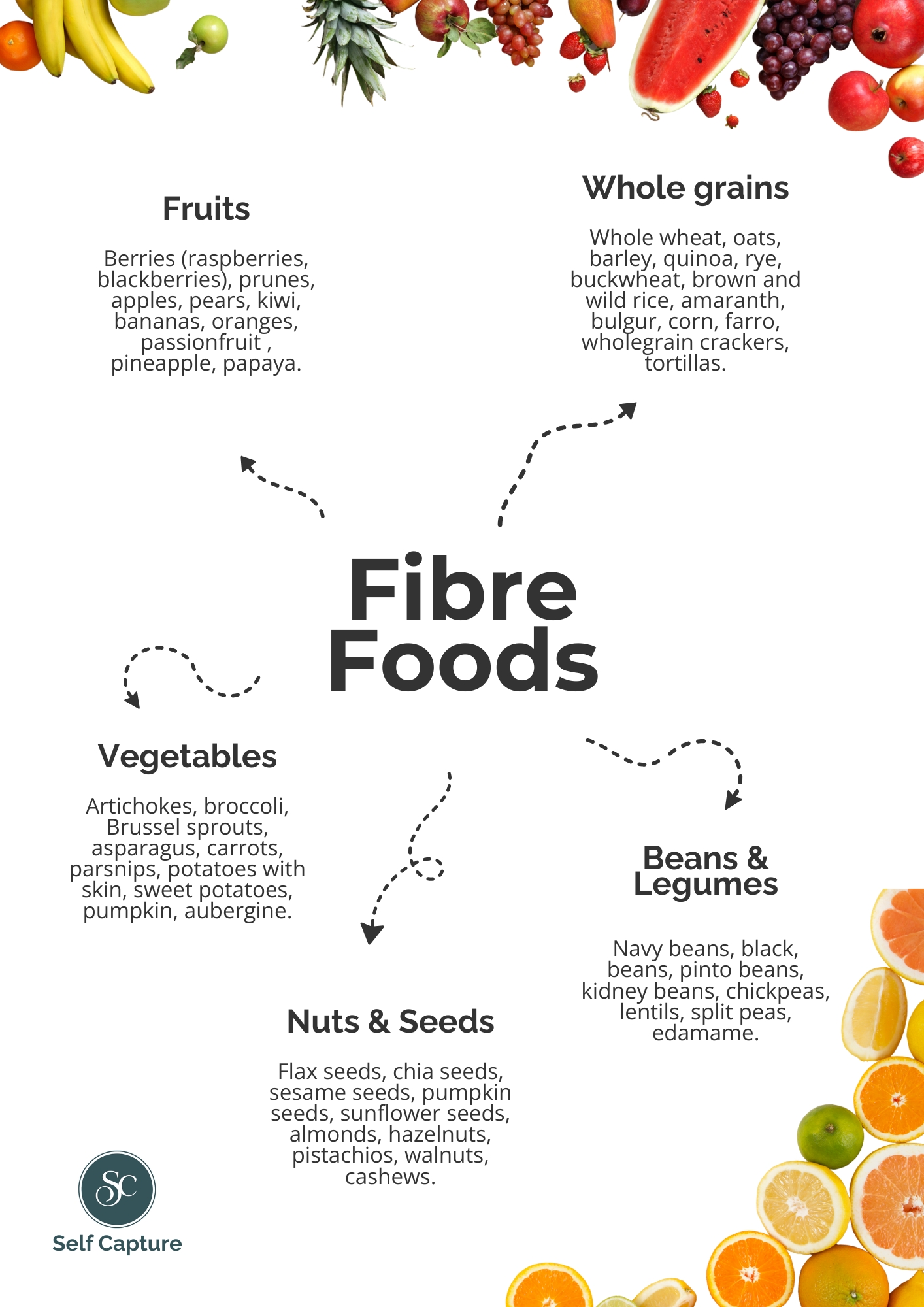
1. Balance Your Fibre Intake
Aim for 25–35 g per day, adjusting for age and reproductive goals.
Combine soluble sources (oats, legumes, berries) with insoluble ones (whole grains, vegetables, nuts) for gut and hormonal synergy.
2. Tune Into Your Cycle If You’re Reproductive-Age
High fibre helps many – but if you’re trying to conceive or tracking ovulation, monitor how fibre impacts your cycle and consider moderating extremely high intakes.
3. Prioritise Low GI + Fibre Meals
Combine whole grains, legumes, and fibrous veggies to stabilize blood sugar and support hormonal balance.
4. Nurture the Microbiome
Include fermentable fibres like oats, legumes, apples, and flax to promote SCFA production and downstream hormonal health.
5. Pair Fibre with Protein and Healthy Fats
This trio helps slow carb absorption, lowers insulin spikes, and sustains satiety – boosting metabolic and hormone health.
6. Observe and Adapt
Track energy, mood, cycle, and digestion. Adjust fibre sources and quantities according to how your body responds.
Encouraging Closing Thoughts
Fibre isn’t just a digestive ally – it’s a dynamic, hormone-supporting powerhouse. By weaving high-quality, diverse fibre into your daily meals (balanced, microbiome-friendly, and cycle-sensitive), you’re taking a forward-thinking step toward hormonal harmony and well-being. Small choices like swapping white toast for wholegrain, adding lentils to a salad, or including berries in breakfast can create meaningful shifts in your energy, mood, and reproductive rhythm.
Trust in these everyday food-centric strategies because for you and other women, it’s the well-nourished path to lasting balance.